
The Ground Hornbill project: Conservation and education
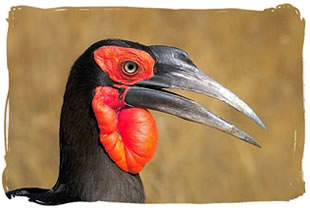
Matobo Schools and Community based Environmental Southern Ground Hornbill Project 2007 – 2009
Who is responsible
Project supervisor: Professor Peter Mundy (Department of Forest Resources and Wildlife Management, National University of Science and Technology – Bulawayo)
Project Co-ordinator – Mrs Elspeth Parry M.C.S.P.
Project Education Officer – Mr Evans Mabiza
Background and inspiration
The impetus for this project is the situation regarding the status of the Southern Ground Hornbill which is now believed to be endangered and most probably “critically endangered” in Southern Africa.
This is due to deforestation, poisoning, and the use of body parts in traditional medicine.
The project
Although this was started as a scientific project, our regular contact with the communities, homesteads and schools in the part of the rural Matobo made us aware of the dire social and economic circumstances of these marginalized communities who play host to this endangered species. We quickly realised that no conservation can be achieved without assisting those who live in this area. At this time much this has been emergency assistance, although we have also endevoured to work towards long term empowerment.
By selecting adjacent homesteads and directing our community work at local schools the project seeks to remove the threat of extinction from the birds as well as increasing awareness of environmental conservation in general within these communities. The children are the future guardians of the lands and its resources and are the best current conduits for disseminating this awareness.
The project was started in 2006 when questionnaires were delivered by hand to all 27 schools involved. The programme was explained to all school heads. A very encouraging 95% returned replies.
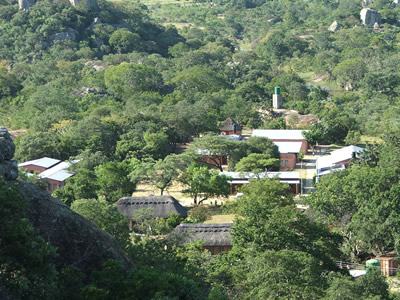
It was then felt that pupils and teachers should be interviewed personally as even at this stage the number of birds looked promising. From this information, the following facts emerged
1. The bird is still revered and protected by Ndebele culture
2. School children walk to school from all directions and are the ideal observers and informants
3. Conservation issues were not being taught in the schools due to lack of teachers
4. The birds have wrecked havoc with school windows
Promoting education through conservation in Zimbabwe
To redress these problems Conservation Clubs have been set up in all 27 schools, consisting of 20-30 pupils living at different points of the compass from the school. They are supplied with a book and pencil to record sightings/nests/roosts. One teacher is asked to supervise the club and given printed recording sheets for other pupils. We now have over one thousand unofficial non subscribing Birdlife members in the Matobo.
Book Aid International have been wonderful – giving us new “remainder” books from Britain to take out for the schools.
Money donations from concerned individuals has enabled us to buy stationary, and more recently blankets for orphans.
Orphans at each school have been targeted for help in every possible way, whether with clothing or school equipment. The ratio of orphans can be as high as three quarters of the class of 40 pupils. These have one parents, no parent, a grandparent or guardian – or in the worst scenario are siblings attempting to exist alone, the eldest being only 12.
School workshops have been held of hundreds of pupils on various topics, such as:
“Endangered species”
“Bird migration”
“Our Heritage”
For the project the immediate benefits have been a greater understanding of the role of these birds within the ecosystem and their social relevance to these communities. The local communities continue to benefit from their interaction with the project.
The long term aims of this project remain
• To conscientise the rural schools and communities to the benefits of conservation with the emphasis on the preservation of the Ground Hornbill. In the Matobo this is greatly assisted by Ndebele reverence for the bird with associated myths and legends
• To record accurately all bird sightings/nests and roosts and maintain records
• To monitor breeding over a period of time
• Publication of material in scientific journals
• Keeping all stakeholders informed
• To maintain a regular, hopefully long term social contribution to these communities with the desire to bring about social stability and upliftment
Initially this project was partly funded by BIRDLIFE ZIMBABWE and more recently funding has been continued by the BRITISH EMBASSY in Harare.
The project is in need of funding from 2010 and any party interested should contact Mrs Elspeth Parry –